
If you are planning to launch a product, choosing the right manufacturing model is one of the most important decisions. Two common models are OEM and ODM.
Although they are often confused, they represent different levels of design ownership, customization, investment, and speed to market.
Table of Contents
📌 OEM vs ODM: Key Differences Explained
📌 What Is OEM Manufacturing?
📌 What Is ODM Manufacturing?
📌 OEM vs ODM: Which One Should You Choose?
📌 OEM vs ODM in the Hat Industry
📌 How Blank Hat ODM Works (Step-by-Step)
📌 Why ODM Is Better for Growing Brands
📌 Best Logo Techniques for Hats (Embroidery vs Print vs Patch)
📌 Is Foremost a Good ODM Partner?
What Is OEM?
OEM stands for Original Equipment Manufacturer.
In the OEM model, the brand provides the product design, specifications, materials, and requirements. The manufacturer then produces the product according to those instructions.
In simple terms:
You design it. The factory makes it.
OEM is best for brands that:
- Have their own product design
- Want full control over product details
- Need strong product differentiation
- Have the budget and time for development
- Want to protect their own intellectual property
Advantages of OEM
- High product uniqueness
- Strong brand differentiation
- More control over design and materials
- Better for long-term product strategy
Disadvantages of OEM
- Higher development cost
- Longer production preparation time
- More sampling and testing required
- Higher risk if the product does not sell well

What Is ODM?
ODM stands for Original Design Manufacturer.
In the ODM model, the factory provides existing, production-ready product designs. The brand chooses a base style and customizes details such as logo, color, material, packaging, or decoration method.
In simple terms:
The factory designs it. You customize and sell it.
ODM is best for brands that:
- Want to launch quickly
- Do not want to develop a product from scratch
- Need lower upfront investment
- Want to test market demand
- Need a reliable existing product structure
Advantages of ODM
- Faster time to market
- Lower development cost
- Easier product launch
- Reduced technical risk
- Suitable for small brands, startups, and promotional buyers
Disadvantages of ODM
- Less product uniqueness than OEM
- Base design may be used by other brands
- Customization is usually limited to available options
- Brand differentiation depends more on logo, color, material, and marketing

OEM vs ODM: Key Differences
| Factor | OEM | ODM |
|---|---|---|
| Product Design | Provided by the brand | Provided by the factory |
| Customization Level | High | Moderate |
| Development Cost | Higher | Lower |
| Time to Market | Longer | Faster |
| Product Differentiation | Strong | Moderate |
| IP Ownership | Usually owned by the brand | Usually owned by the manufacturer |
| Best For | Established brands with unique designs | Brands that want fast launch and lower risk |
OEM vs ODM in the Hat Industry
In the headwear business, the difference is easy to understand.
OEM Hat Manufacturing
A brand provides a complete hat design, including:
- Hat shape
- Fabric
- Panel construction
- Visor design
- Closure
- Logo artwork
- Packaging requirements
The factory produces exactly according to the brand's specifications.
This is suitable for brands that already have a clear product concept and want a fully customized hat.
ODM Hat Manufacturing
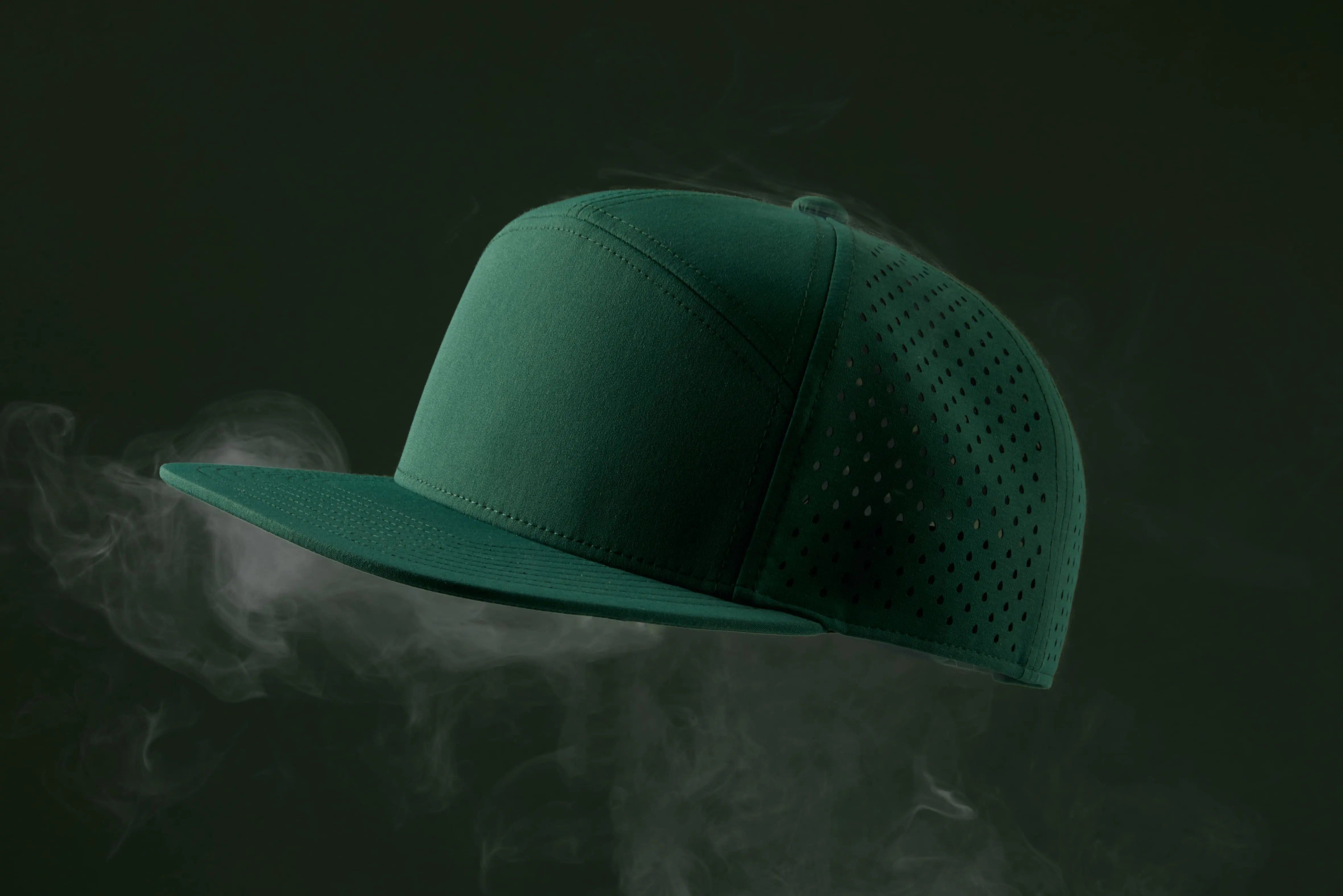
The factory provides existing blank hat styles, such as:
- Baseball caps
- Dad hats
- Trucker hats
- Bucket hats
- Beanies
- Running caps
- Rope hats
The brand selects a ready-made style and customizes it with:
- Logo
- Embroidery
- Patch
- Printing
- Color
- Material
- Packaging
This is suitable for brands that want to move faster and reduce development risk.
Which One Should You Choose?
Choose OEM if you need:
- A fully original product
- Unique structure or special design
- Full control over materials and construction
- Long-term brand differentiation
Choose ODM if you need:
- Faster launch
- Lower MOQ or lower development cost
- Proven product styles
- Easy customization
- A practical way to test the market
Why ODM Is Often Better for Growing Hat Brands
For many growing brands, ODM is the more practical starting point. Instead of spending months developing a new hat from scratch, brands can select a proven blank hat style and customize it with their logo, color, material, and decoration method.
According to QIMA's 2026 global sourcing survey, only 18% of businesses report having full end-to-end visibility into their supply chains. This means most brands still operate with limited transparency across supplier networks, making it difficult to fully control quality, timelines, and compliance.
In this context, the ODM model helps reduce uncertainty. Brands can focus their resources on product customization, branding, and marketing, while relying on manufacturers with established production systems, proven base styles, and structured supply chain processes.
For independent labels still in incubation, established brands validating a new product line, or corporate clients looking for branded merchandise, blank hat ODM is often one of the lowest-risk ways to enter the market. There is no need for tooling, no need for pattern development, and a brand-exclusive hat can be created from 1 pieces.
This helps brands:
- Launch faster
- Reduce sampling risk
- Control development cost
- Test new categories
- Build collections more efficiently
For example, a brand can start with a blank rope hat, running cap, or organic cotton dad hat, then customize it with embroidery, PVC patch, woven patch, or transfer print.
In short, ODM gives growing hat brands a faster, more flexible, and lower-risk path to launch custom headwear without starting from zero.
Which technique is better? Embroidery, print, or patch?
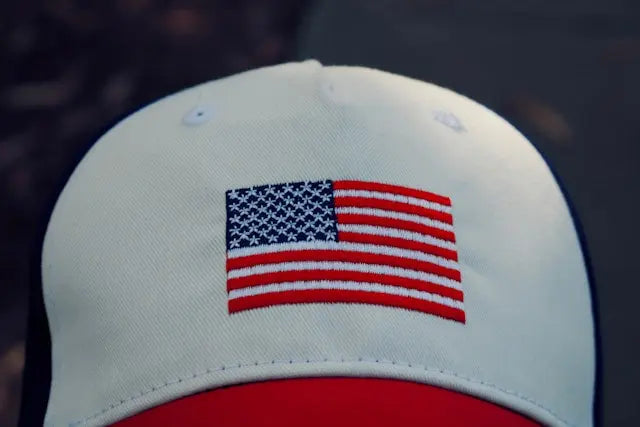
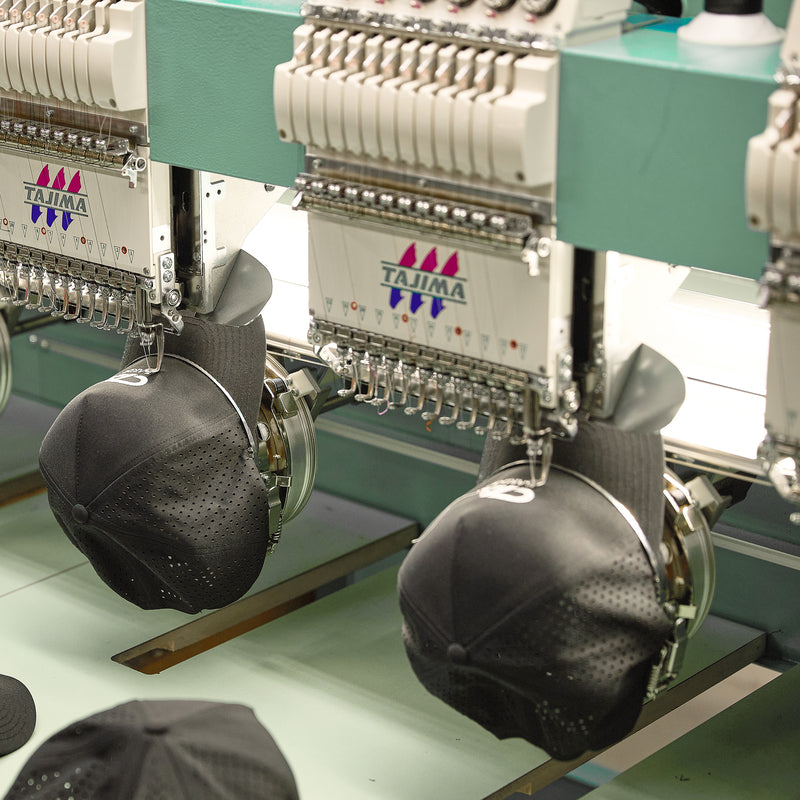
Your logo application technique directly shapes not only the visual quality of the finished hat, but also how your brand is perceived at first glance. It plays a key role in defining texture, depth, durability, and overall positioning in the market. Embroidery, for example, delivers a rich, dimensional texture with raised stitching that conveys craftsmanship and is especially suited to premium or heritage-inspired brands. PVC patches, on the other hand, provide bold, highly saturated colors along with excellent durability and water resistance, making them ideal for outdoor, sports, and performance-driven aesthetics. Screen printing offers strong flexibility in terms of cost and design execution, making it a practical choice for intricate, multicolor graphics or large-scale production runs where consistency and efficiency are critical.
Beyond these core options, selecting the right technique also involves considering factors such as fabric compatibility, logo size, placement, and the intended end-use of the product. A well-matched application method can elevate even a simple design, while the wrong choice may compromise clarity or longevity. That's why Foremost Hat's team gets involved early in the process—reviewing your artwork in detail, identifying potential production challenges, and recommending the most suitable technique from the very first sample stage. This ensures that what looks good on screen translates seamlessly into a high-quality physical product that aligns with your brand vision.
Is Foremost Hat's ODM the right fit for your brand?
If you're looking for a blank hat ODM partner that combines low MOQ, fast turnaround, full category coverage, and certified compliance, Foremost checks every box. Since 1996, the company has served over 1,000 brands and organizations worldwide. Its five wholly-owned factories produce more than 2.3 million hats per month — covering baseball caps, bucket hats, beanies, sun hats, and more.
Whether you're a first-time buyer or an established brand seeking a reliable production partner, Foremost offers a one-stop online customization service — from artwork submission to sample delivery, the fastest turnaround takes just a few days.
❓FAQ
How long does the ODM sample and production process usually take?
Sample development usually takes around 2–7 days depending on complexity. Once the sample is approved, bulk production typically requires 10–15 days. Overall timelines may vary slightly based on materials, logo techniques, and order volume.
Can I fully customize materials, colors, and logo placement?
Yes. ODM allows full customization within a proven base structure. You can adjust fabric choices, color combinations, and logo placement methods such as embroidery, PVC patch, woven label, or screen printing. The factory team will also provide recommendations based on your design and target market.
How is quality consistency ensured in bulk production?
Quality consistency is maintained through standardized production workflows, pre-approved samples, and multi-stage inspections during manufacturing. Key checkpoints include fabric inspection, embroidery or printing accuracy, stitching strength, and final packaging checks before shipment.